
| |
| Volume 16, Number 3 | September 24, 2026 |
The ARP Rodent Lab has now produced a second Extraordinarily Long-Lived Mouse (ELLM). Only this time, the daily intake of the anti-aging vitamins, MePA and MePiA, was just 6.6 μg (micrograms) each per liter of drinking water. The first time it was 100,000 μg each per liter of drinking water. This has caused the penny finally to drop with me in regard to the true nature of the ELLM phenomenon, with numerous implications.
In the present article, results from three recently-completed concurrent mouse longevity experiments are presented. The results of the first two experiments provide context for discussion and evaluation of ELLM-2, the extraordinarily long-lived mouse produced by the third experiment.
The focus this issue is on development of a theory explaining the ELLM phenomenon. This new theory then automatically gives rise to substantial discussion under a variety of headings.
My earliest MePA and MePiA experiments with lab mice, beginning ten years ago, had used very large doses. I refer to these early experiments as megadose experiments. At the time, I was looking for what I called "vitamin X," the then unknown vitamin responsible for pre-Flood longevity. While vitamin X was expected to have been available pre-Flood in drinking water at probably less than 10 μg/L (micrograms per liter), the mice were treated at 100,000 μg/L.
Megadoses were used early on for two reasons. First, I needed to know about the toxicity of MePA and MePiA. These two small acids were only candidates for vitamin X at the time. Toxicity in mice would argue against this candidacy. Megadoses would expose any toxicity most rapidly. Second, on the flip side, megadoses stood the best chance of most rapidly exposing any life-lengthening effects due to these candidate substances.
I abruptly switched away from megadose experiments four years ago. MePA and MePiA had been found to be a vitamin X duo by that time. And evidence of mild chronic toxicity at megadose levels had surfaced. This raised the possibility that the full life-lengthening potential of MePA and MePiA in mice was being masked by this toxicity. So I launched a set of mouse longevity experiments using normal vitamin-like concentrations for the first time. It seemed possible that these experiments might result in a high percentage of ELLM. As is usual for mouse longevity experiments, it took three years to find out. They did not yield a high percentage of ELLM, as the following results show, but this negative result has had a large positive impact on my understanding of the ELLM phenomenon.
My first goal with these new experiments was to get a better idea of what the optimum daily intake of MePA and MePiA might be. This required two separate experiments, one testing MePA by itself and the other testing both vitamins together. MePiA spontaneously oxidizes slowly to MePA, so it is not possible to test MePiA by itself.
The result of the experiment to test both vitamins together is shown in Figure 2. This experiment utilized a cohort of 108 same-age female mice assigned randomly to one of three groups of 36 mice.[1] The date of birth of this cohort of mice was August 26, 2022. All mice were caged singly in this experiment and also in the other two experiments.
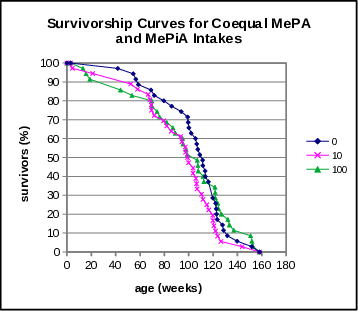 |
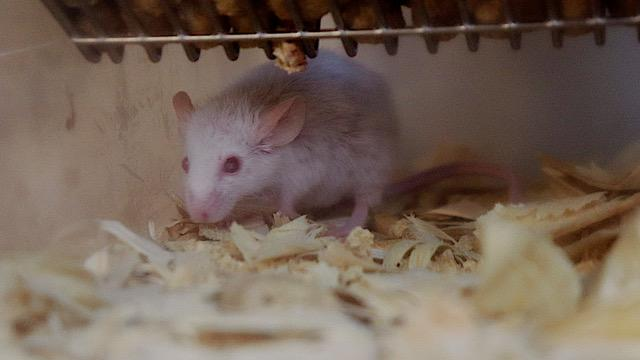
The main thing to notice with this graph, in the present context, is that this experiment produced no ELLM. In each of the three groups, including the untreated control group, the final mouse died on the same day, September 6, 2025. They were all 158.1 weeks old at the time of their deaths. The original extraordinarily long-lived mouse, ELLM-1 (Figure 1), had lived to 171.6 weeks.[2]
 |
The result of the experiment to test MePA alone is shown in Figure 3. This experiment also utilized a cohort of 108 same-age female mice assigned randomly to one of three groups of 36 mice. The date of birth of these mice was January 20, 2023.
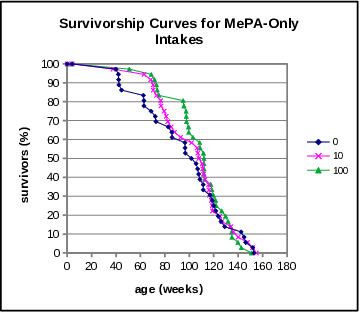 |
This experiment also produced no ELLM. The longest-lived mouse in this case died at just 154.9 weeks of age.
These first two experiments failed in their primary purpose of helping to nail down the optimum daily intakes of MePA and MePiA because they failed to produce the anticipated large percentage of ELLM.
Experiment 3 was initiated after the first two experiments had been launched but long before they were complete. It was designed to explore the question of whether there might be an optimal age to begin treatment with the vitamins.
The result of this experiment is shown in Figure 4. It also utilized a cohort of 108 same-age female mice, but this time, the mice were assigned randomly to one of nine groups of 12 mice. The date of birth of these mice was May 26, 2023.
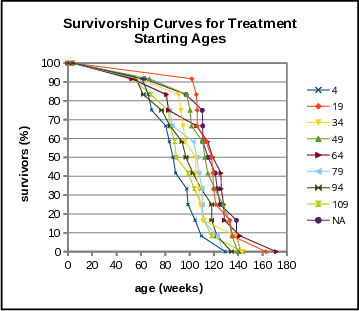 |
The graph shows that different starting ages gave different survivorship curves, but because the number of mice per group was small, statistical significance of these differences was not achieved. So, once again, the experiment failed in its primary purpose.
While this experiment, like the first two, failed to yield the anticipated large percentage of ELLM, it did result in at least one ELLM. It produced two mice having anomalously high life spans relative to the other 106 mice in the cohort. The longest-lived of these two is clearly an ELLM. It died at 171.3 weeks of age, just two days short of ELLM-1. This is ELLM-2.
The ELLM status of the 2nd of these two anomalously long-lived mice—the red diamond on the X axis in the bottom right corner of the graph—is not so clear-cut. This mouse lived for 162.7 weeks. The graph shows that this is well separated from the remainder of the cohort, the longest-lived mouse of which died at 143.9 weeks. But it does not appear quite so anomalous when compared to the Experiment 1 and Experiment 2 results. Because it is not necessary to classify it as an ELLM for the sake of the present discussion, I have chosen to leave it aside for now.
The advent of ELLM-2 emphasizes, of course, that the ELLM phenomenon cannot be brushed off as a once-in-a-lifetime statistical anomaly. ELLM-2 shows that the ELLM phenomenon is reproducible.
The ELLM phenomenon happens, as a relatively rare event, only when mice are treated with the anti-aging vitamins. It has never been observed to happen when mice are not treated with these vitamins.
Why? What is the underlying cause of this phenomenon?
The big clue to answering these questions is the observation that ELLM-2 results from treatment with the anti-aging vitamins at normal vitamin-like concentrations—just 6.6 μg/L. For MePiA to do any good, it has to get into the mitochondria.[3] At megadose concentrations, one can imagine this happening possibly by diffusion, because diffusion is driven by the difference in concentration on the two sides of a membrane. But at normal vitamin-like concentrations, diffusion fails as an explanation of how MePiA—both scarce and ionic at physiological pH—manages to cross the inner mitochondrial membrane. A special transporter to shuttle MePiA through this membrane is the only option. And this implies genetic involvement in the ELLM phenomenon.
This leads to the kernel of the new theory. I suggest that the ELLM phenomenon is due to genetic differences in the individual mice. Said another way, ELLM is fundamentally a genetic trait, just like the color of the fur is a genetic trait. Some of the mice in this strain of mice possess this trait, while most do not.
The frequency of this trait can be estimated from ARP Rodent Lab data. In this article, two or possibly three mice expressing this phenotype have been counted. Let us call it 2.5 mice. The number of mice of this same strain which have been suitably treated with both MePA and MePiA to date is roughly 160. These numbers yield a frequency of 1.6±1.0%. In genetics, a trait which is observed in less than 1% of the population is called rare, from 1 to 5% it is called low-frequency, and above that it is called common. So ELLM appears most likely to be a low-frequency trait.
It is fairly easy to assign a transporter gene function to this trait. The previous issue, for example, clarified that, in humans, MePiA enhances longevity by protecting mitochondria from oxidative damage.[4] In that issue, it was stressed that MePiA requires a special transporter, or carrier, to bring it into the mitochondria through the inner membrane. It follows that a gene must exist for synthesis of the needed transport protein within the cell.
In the case of humans, this single gene may not be all that is needed. It was also shown last issue that, for humans, MePiA seems to be somehow concentrated in the mitochondrial matrix at the location where it is most needed, and this implies additional genetic support of the pre-Flood longevity trait in humans. But it seems most likely that the case with mice is simpler than it is with humans—the extension of life span due to dietary MePiA seen in mice is certainly much less than it is with humans. Regardless, to keep this simple for greatest clarity of the basic principles involved, let us assume for the sake of present discussion that there is only this one gene involved with mice.
I have called the trait which this gene codes for, "ELLM," so let E represent the ELLM allele. As usual for double-stranded DNA, there will be two alleles at this gene locus, one inherited from each parent. Label an ELLM-functional allele at this gene locus E and a dysfunctional allele at this gene locus e. As usual, there are then three possibilities for this gene for any given individual: EE, Ee, and ee. Individual mice carrying EE or Ee will be ELLM, while mice carrying ee will be "normal" mice, not ELLM.
This constitutes a simple theory explaining the underlying cause of the ELLM phenomenon.
We could stop here. But this simple theory instigates new questions and sheds new light in several directions. It seems best to document these in the present article.
The first question is how the observed low frequency of ELLM has come about.
The presently observed low frequency implies that most of these mice must be ee at present, with only a tiny admixture of Ee.
My initial hypothesis for this was that spontaneous mutation has reduced the allele frequency for the ELLM trait from 100% EE pre-Flood to the presently observed mostly ee.
Spontaneous mutations can happen as copy errors when chromosomes are being copied in preparation for cell division, as is necessary for germ line cells for sexual reproduction. The copy process is very high fidelity, but still not perfect. As a result, mutations can accumulate in a population, generation by generation. Deleterious mutations are weeded out by natural selection.
My initial hypothesis was motivated by the observation that there has been no natural selection operating to sustain EE for thousands of years. By roughly a thousand years after the Flood, natural environmental MePA and MePiA had dwindled to zero. In the absence of dietary MePiA, there is no advantage for mice possessing EE or Ee compared to mice having ee. Hence there is no natural selection increasing frequency of E.
This initial hypothesis is conceptually simple and logically robust. Unfortunately, it does not work out quantitatively.
The measured mutation rate due to copy errors for mice is extremely low, roughly one mutation per 100 million (i.e., 10-8) per DNA base pair copied. For a typical allele—roughly a thousand base pairs—this gives a mutation rate per generation of 10-5 (i.e., one newly mutated E allele per 100 thousand mice). There have been something like 20,000 generations of mice since the loss of the anti-aging vitamins after the Flood. For a 10-5 mutation rate per generation, the expected frequency of the ELLM trait after 20,000 generations with natural mutation and zero selection, starting with 100% EE works, out to 97%. This means that the loss of this ELLM trait since the Flood has been only 3%.
As a brief aside, this is good news for humans. Because there have been many fewer generations of humans than there have been of mice since the Flood, it implies that there is likely to have been little loss among the modern human population of the genetics needed to support pre-Flood life spans once the anti-aging vitamins have been added back into the diet.
Getting back to the main discussion, it is now clear that the basic theory is sound, but the assumed starting condition must be mistaken. The correct hypothesis requires that pre-Flood mice were pretty much as they are at present, mainly ee, not EE.
In hindsight, this is not surprising.
Wild mice experience a very different probability of death throughout their lives compared to what we humans experience. We have a very low probability of death when young, which becomes large in our 70's and beyond. Wild mice have a large and constant probability of death from the start.
Mice are heavily preyed upon by cats, snakes, owls, coyotes, etc. Their probability of death at any point in time is pretty much the same regardless of their age.
This explains why there are essentially zero field mice with white fur in temperate and tropical regions. White offers roughly zero camouflage in the wild habitat of the field in such regions. White (albino) mice, at all ages, will be naturally removed from the population by predators.
In stark contrast to fur color, ELLM offers little advantage against predation. Very few wild mice ever reach old age, where the ELLM trait becomes significantly advantageous. This results in minuscule amplification of this trait by natural selection from generation to generation, even when MePiA is naturally abundant, as it was pre-Flood. The frequency of E, introduced as a new mutation in remote virtual history, has always been low, even prior to the Flood.[5]
This leads to the next question. But doesn't all of this mean that MePiA must have been naturally abundant in the past?
Yes, that is exactly what it implies.
As discussed above, in the absence of naturally abundant MePiA, there would be no natural selection of E, and normal mutation would ultimately eliminate the ELLM trait entirely, the same way blind cave fish have lost their sight by living perpetually in the dark. The fact that the ELLM trait is observed as a low-frequency trait today guarantees that MePiA was naturally present in drinking water in antiquity.
This corroborates the Bible/science model of earth history and falsifies the current mainstream science model of earth history.
Specifically, the mainstream science model excludes the biblical historical Flood of Noah. This is an error of enormous consequence, as has been shown repeatedly in this research newsletter. In the present context, it results in the mistaken assertion that there is and could never have been any atmospheric component of the phosphorous cycle. Here is AI answering my Socratic questions on this topic:[6]
GEA: Does the phosphorus cycle have an atmospheric component?
AI: No—the phosphorus cycle has no significant atmospheric (gaseous) component. Phosphorus does not readily form stable gases, so it cycles only through the lithosphere, hydrosphere, and biosphere (rocks, soil, water, and organisms), making it a sedimentary cycle rather than an atmospheric one like carbon or nitrogen.
One caveat: a small amount of phosphorus does reach the atmosphere as particulate matter—mineral dust, sea spray, and biomass-burning aerosols—which can be wind-transported and deposited over land and ocean. But because phosphorus lacks a true gaseous phase, this is only a minor, non-cyclic transfer and not a functional atmospheric reservoir.
GEA: Does this make phosphorus unusual in this regard?
AI: Yes—it's actually the defining feature that makes phosphorus stand out. Among the major biogeochemical cycles (carbon, nitrogen, water, sulfur, oxygen), phosphorus is essentially the only one without a significant atmospheric component. Every other major cycle has at least one gaseous phase (CO2, N2, H2O, SO2, O2) that lets the element move quickly through the air.
This has a few important consequences that make phosphorus ecologically distinct:
So yes—the absence of a gaseous phase is what makes phosphorus genuinely unusual among the essential biogeochemical cycles.
It's the slowest major cycle. Without a fast atmospheric "shortcut," phosphorus depends on rock weathering and geological uplift for long-term replenishment—a process measured in millions of years.
It's the limiting nutrient in freshwater ecosystems. Because there's no atmospheric reservoir to replenish it, local availability is tightly controlled by geology and runoff.
It's a true sedimentary cycle, unlike the "gas-phase" cycles of carbon and nitrogen, which is why it's often singled out in textbooks as the exception.
AI's statement, "Phosphorus does not readily form stable gases, so it cycles only through the lithosphere, hydrosphere, and biosphere (rocks, soil, water, and organisms), making it a sedimentary cycle rather than an atmospheric one like carbon or nitrogen," says that the lack of an atmospheric component to the phosphorus cycle is the result of an intrinsic property of the phosphorus atom. This says that there could never have been any atmospheric component of the phosphorus cycle.
In point of fact, there was an atmospheric component to the phosphorus cycle in antiquity, just as the other biogeochemical cycles have today, right up until Noah's Flood broke it 3520 B.C.[7] The atmospheric trace gases involved were likely phosphine (PH3) accompanied by methylphosphine (MeP). MeP reacted in the atmosphere to produce methylphosphinic acid (MePiA) and methylphosphonic acid (MePA)—the anti-aging vitamins.
The problem is not that the phosphorous atom is cantankerous about forming gases. The case of phosphorous is not intrinsically different from the other biogeochemical cycles. We just happen to be observing the phosphorus cycle at a time when its atmospheric component has been (temporarily) shut down—by Noah's Flood. But you can't know this, of course, if you have excluded Noah's Flood from your model of earth history at the outset, as modern academia has done.
History remembers this Flood: in the Bible, and in the Gilgamesh Epic, for example. And even mice still remember it: in their genes, which testify unequivocally to an atmospheric component to the phosphorus cycle in antiquity.
And, I suggest, even humans still remember it: in their genes, even if not in their (muddled) heads. I present the following prediction as a way of testing this:
Prediction: An existing mitochondrial transporter for MePiA will eventually be identified both in mice and in humans.
Numerous mitochondrial transporters are known to modern science. The specific molecule being transported, called the substrate, is unique to each transporter. I asked AI to count the number of known transporters in humans:[8]
53 human mitochondrial carrier proteins are known—the members of the SLC25 (mitochondrial carrier family) that shuttle ions and metabolites across the inner mitochondrial membrane.
A few important qualifications:
Those 53 are the canonical SLC25 family, the largest solute-transporter family in humans. In addition, a smaller number of non-canonical mitochondrial transporters exist — e.g. the mitochondrial pyruvate carrier (MPC, a heterodimer of MPC1/MPC2) and a few ABC transporters (ABCB7, ABCB8, ABCB10) — so the total number of human mitochondrial transporters is somewhat higher than 53.
Roughly a third to a half of the 53 SLC25 members still have unknown or unconfirmed substrates, so "known" here means identified as mitochondrial carriers, not fully characterized functionally.
If you're after the strict SLC25 count, the answer is 53; if you mean all mitochondrial transporters including non-SLC25 families, the number is a bit higher.
The theory of ELLM presented above prompts the prediction that MePiA will eventually be found to be the substrate for one of the carrier proteins whose substrate is presently unknown.
ELLM-2 offers some encouraging input to some currently perplexing, urgent questions regarding human aging. Mice are not humans, so results from mice cannot simply be ported over into the human sphere. But mice are mammals, like humans, so there are deep similarities between the two in regard to genetics and physiology. Results from mice are helpful in establishing expectations for humans.
Here are three important questions answered by ELLM-2.
What is the proper daily intake of MePiA?
ELLM-2 shows that even as little as 6.6 μg MePiA/L drinking water is efficacious with mice.
For humans, this corresponds to a daily intake for adult males of roughly 20 μg MePiA. This is in harmony with the prediction, made very early on, that the optimum intake of the anti-aging vitamins "will likely be found to be within a factor of ten of a few micrograms per day."[9] It supports the prediction made last issue that the current RDI for adult human males of 125 μg MePiA per day will likely be revised downward in the future.[10]
What happens when supplementation with MePiA begins only later in life?
ELLM-2 started on MePiA at 64 weeks of age. The average lifespan for these female ICR mice is about 2 years (104 weeks). For humans, the equivalent age is roughly 75 years. So, ELLM-2 is like a human beginning to supplement MePiA at 46 years of age. She demonstrates that, in this situation, the benefits of MePiA—increased health and longevity—still apply.
How long does it take for MePiA to replenish in the mitochondria?
It appears that ELLM-2 had been enabled to express her ELLM trait by 144 weeks, the point at which her non-ELLM cohorts had all died. If she had not replenished her mitochondria adequately by this time, then, having received no ELLM benefit, the expectation is that she would have been dead too. This is 80 weeks (1.5 years) after supplementation with MePiA had begun. Thus it appears that, in mice, 1.5 years of daily supplementation is sufficient to replenish mitochondrial MePiA.
Since mice and humans are dealing with the same bottleneck to replenishment of transport of MePiA through their mitochondrial inner membranes, a similar length of time is expected to apply in both instances.
The ELLM phenomenon illustrates the General Theory of Aging for Biological Organisms, clarifying its meaning in the process.[11]
General Theory of Aging for Biological Organisms: Aging in all organisms of all species is always simply progression of congenital disease.
Even though the idea which this theory is expressing is really very simple, it may seem difficult to grasp because confusion about what aging is and how it comes about is so deeply entrenched in popular culture. For this reason, the ELLM phenomenon presents a welcome illustration of the theory.
To assist with this illustration, I will begin with an analogy, using AI once again for the specific details.[12]
GEA: Compared to modern cars, how many miles did early cars get before they went to the junkyard?
AI: Cars from the 1950s–1970s were typically considered ready for the junkyard at around 75,000–100,000 miles, and in 1970 the average car on the road was only about 5.7 years old. Many of those cars even had odometers that rolled over at 99,999 miles, reflecting how abnormal high mileage was considered.
Today, the average American car is about 12 years old and reaches roughly 156,000 miles before being scrapped, with well-maintained vehicles commonly hitting 200,000–300,000+ miles — more than double the lifespan of their predecessors.
Modern cars have a greater longevity than vintage cars. Why? Because many design flaws in vintage cars have now been eliminated or at least ameliorated.
For example, many of these early cars went to the junkyard because the body had rusted badly and was full of holes. The vintage design for car bodies, which used untreated mild steel, has been replaced by a better design in modern cars which uses galvanized steel and cathodic e-coat primers.
The use of untreated mild steel worked in vintage cars—it gave a usable car body—but it didn't last very long. This is a simple example of a design flaw. This design flaw was present in every new car which rolled out of the factory. Before too long, these cars wound up in the junkyard.
In this analogy, design flaws play the same role congenital diseases play in biological organisms. We could say that the cars were born with congenital rust-out disease. This disease has not been entirely cured in modern cars, but it has been significantly ameliorated by improved design.
This is not the only congenital disease of vintage cars which has now been ameliorated. Another was lack of central neurological control. Modern cars have an Engine Control Unit (ECU) which vintage cars lacked. The ECU is a computer which monitors and continuously adjusts powertrain components to maintain peak efficiency and reduce wear. The design change in this instance has been from haphazard in vintage cars to controlled in modern cars, improving powertrain longevity.
Other examples could be given, but these two are sufficient to make the point. Vintage cars did not die (go to the junkyard) because of a mysterious natural phenomenon called aging. They died because of congenital diseases.
The same is true of living organisms. They do not go to the grave because of a mysterious natural phenomenon called aging. They go to the grave because of congenital diseases. Cure or ameliorate these congenital diseases and the organisms will live longer.
Aging is not some sort of special phenomenon of nature. It is merely the (badly misleading) label we give to the rapid progression of observed symptoms in the oldest members of a large population.
This "special aging phenomenon" notion is embedded in our everyday language, making it difficult to eradicate. For example, for humans, you may hear someone referred to as a "healthy 60-year-old." This may be a little hard to grasp at first, but notice that a healthy 60-year-old is not healthy. There are no healthy 60-year-olds in the modern human population. If there were, some would still be playing professional football. At 30, they could play professional football. At 60, they definitely cannot. This is because symptoms of their congenital diseases have become all too evident by age 60. If left untreated, these congenital diseases will kill them, generally within one or two more decades. These individuals are not healthy.
Their sickness, we now know, is due to two universal, congenital vitamin deficiency diseases: MePA deficiency disease and MePiA deficiency disease. These vitamins are now available commercially. Get them. Take them.
Before Noah's Flood, these vitamins were abundantly available in drinking water, so nobody was dying of their deficiency diseases. Back then, people were living to more than 900 years of age. Then they would die, at 925 years of age on average, because they were afflicted with a different congenital deficiency disease stemming from loss of the fruit from the Tree of Life.[13] Their "aging" was caused from an entirely different congenital deficiency disease than our "aging", yet the accelerating mortality with age at the end of their life spans was just like the accelerating mortality with age at the end of our life spans. This is because nutritional deficiency diseases naturally result in accelerating mortality as the disease progresses with the passage of time.
Neither modern nor ancient humans died of a special natural aging phenomenon. They have all died of congenital deficiency diseases, different in the past from those at present. There is no special natural aging phenomenon. There is only this confusing "aging" label we mistakenly assign to congenital diseases which, in the lab, kill off a same-age population at an increasing rate as these diseases naturally progress and get worse. They get worse not because of age or aging. Birthdays are benign.
The ELLM phenomenon pinpoints one congenital disease of mice. This specific congenital disease is reactive oxygen species (ROS) damage to mitochondria.[14] This congenital disease is shared by humans and many other biological organisms.
This congenital disease can be cured or significantly ameliorated by suitable application of antioxidants. We know this from the pre-Flood human life span data. The great length of pre-Flood human life spans relative to the brevity of mouse life spans implies that humans have been blessed with significantly more design improvements with this specific congenital disease than have mice.
MePiA is one of the antioxidants needed to prevent congenital ROS damage. Mice (and humans) having this antioxidant in their mitochondria will be healthier and live longer because ROS damage to their mitochondria will be reduced.
To have MePiA in their mitochondria, mice must 1) have MePiA in their diets, and 2) possess the ELLM allele, E, in their genetic makeup. Thus, lab mice not treated with MePiA in their drinking water will not show extraordinary longevity regardless of their genetics, and most mice treated with MePiA in their drinking water will still not show extraordinary longevity because they lack the E allele in their genetics.
Normal mutation and natural selection have long ago in virtual history equipped mice populations with the E allele. But it has remained present only at low frequency because ELLM is a late-acting trait, and late-acting traits receive little amplification from one generation to the next in organisms like mice which are subject to heavy predation.
ROS damage is only one of the many congenital diseases from which mice suffer. We see symptoms of these other diseases in the lab. They are what cause lab mice to die. Some mice die of tumors, often visible and obvious. Some die of nervous disorders, hyperactively running circles in their cages. Some die of skin diseases. Some waste away slowly, afflicted with unknown disease. Others look fine one day but are dead the next, also afflicted with unknown disease.
The ELLM trait, in the presence of dietary MePiA, likely suppresses the frequency of many such congenital diseases because it strengthens the mitochondria, which strengthen every cell in the body. But the ELLM trait does not grant immortality to mice. Yet other unknown congenital diseases lurk. These are late-acting congenital diseases, not normally seen in the lab because most lab mice, lacking the ELLM trait, die before these late-acting congenital diseases ever begin to take a significant toll on the population.
We may think of the ELLM trait as being on the current horizon of natural selection's action against congenital diseases of mice. Late-acting congenital diseases lie just beyond this horizon. The weeding out of these late-acting congenital diseases is a very slow process for the same reason the amplification of the ELLM trait is a very slow process. Natural selection has little opportunity to weed out late-acting diseases in a heavily predated population. ELLM-2, like ELLM-1, died because late-acting congenital diseases are a reality—even though they possessed the ELLM trait, granting them unusual longevity, they were too-soon killed by some late-acting congenital disease.
This is like modern cars. Even though many of the design flaws which afflicted vintage cars have been fixed or ameliorated with modern cars, this has not made modern cars immortal. They still wind up in the junkyard because other late-acting design-flaws yet remain.
Mice may be viewed as just starting out on the anti-ROS sequence of design-improvements necessary to grant extreme longevity, while humans may be viewed as near the end of this particular sequence.
For mice, we do not yet know what the late-acting diseases responsible for the deaths of ELLM-1 and ELLM-2 were. For pre-Flood humans, Genesis informs us, as mentioned above, that the late-acting congenital disease which killed them was a nutritional deficiency disease stemming from loss of the Tree of Life. I have previously dubbed this TOLA, for Tree-Of-Life Aging.[15]
The advent of ELLM-2 has clarified that the ELLM phenomenon, which significantly extends the longevity of lab mice, is due to a genetic trait—just as the General Theory of Aging for Biological Organisms says it should be:[16]
We have just seen that changes to the design of a machine can significantly alter its spectrum of congenital diseases and thereby impact its longevity. Biological organisms are mutable, self-replicating machines. Mutation alters machine design, creating diversity in offspring. Thus, longevity will vary in biological offspring. Longevity is a heritable trait. As such, it is subject to natural selection.ELLM-1 and ELLM-2 provide a laboratory example of the true nature of the phenomenon we mistakenly call aging and of how it is that natural selection brings about increasing longevity.
The genes needed to protect both mice and humans from ROS damage to their mitochondria in the presence of dietary MePiA are expected to have been retained, little diminished in frequency since the Flood. Thus, modern humans supplementing vitamin MePA and MePiA daily from early childhood on are expected to enjoy life spans comparable to pre-Flood humans—i.e., life spans of nearly a thousand years. Individuals beginning to supplement the anti-aging vitamins only late in life are expected still to experience improved health and longevity. ◇
The Biblical Chronologist is written and edited by Gerald E. Aardsma, a Ph.D. scientist (nuclear physics) with special background in radioisotopic dating methods such as radiocarbon. The Biblical Chronologist has a fourfold purpose:
The Biblical Chronologist (ISSN 1081-762X) is published by: Aardsma Research & Publishing Copyright © 2026 by Aardsma Research & Publishing. |
^ As in previous experiments, these mice were outbred white laboratory mice of the strain Hsd:ICR (CD-1®).
^ Gerald E. Aardsma, "ELLM: the Extraordinarily Long-Lived Mouse," The Biblical Chronologist 10.9 (May 19, 2020): 1–7. www.BiblicalChronologist.org.
^ Gerald E. Aardsma, "The RDI for Vitamin MePiA Has Now Been Increased," The Biblical Chronologist 16.2 (July 3, 2026): 4. www.BiblicalChronologist.org.
^ Gerald E. Aardsma, "The RDI for Vitamin MePiA Has Now Been Increased," The Biblical Chronologist 16.2 (July 3, 2026): 4, 8. www.BiblicalChronologist.org.
^ The E trait would be expected to have arisen as a consequence of a whole gene duplication copy error, not as a result of a simple point mutation converting an existing e back to E. There was no originally existing e. The hypothetical duplication would be of an already existing functional mitochondrial transporter gene for some other substrate (i.e., the transported molecule) than MePiA. There are lots of these transporter genes for various substrates at present. From there, one or more subsequent point mutations of one copy of the duplicated gene would be needed to allow for it to carry MePiA instead of its original substrate. Notice that this would happen without loss of the necessary function of the other copy of the duplicated gene.
^ Text generated by Brave Search (September 9, 2026): https://search.brave.com.
^ Gerald E. Aardsma, Aging: Cause and Cure, 3rd ed. (Loda, IL: Aardsma Research and Publishing, 2023). www.BiblicalChronologist.org.
^ Text generated by Brave Search (September 15, 2026): https://search.brave.com.
^ Gerald E. Aardsma, Aging: Cause and Cure (Loda, IL: Aardsma Research and Publishing, 2017), 109. www.BiblicalChronologist.org.
^ Gerald E. Aardsma, "The RDI for Vitamin MePiA Has Now Been Increased," The Biblical Chronologist 16.2 (July 3, 2026): 12. www.BiblicalChronologist.org.
^ Gerald E. Aardsma, Aging: Cause and Cure, 3rd ed. (Loda, IL: Aardsma Research and Publishing, 2023), 50. www.BiblicalChronologist.org.
^ Text generated by Brave Search (September 22, 2026): https://search.brave.com.
^ Genesis 3:22.
^ Gerald E. Aardsma, "Vitamin MePiA's Role," The Biblical Chronologist 16.1 (June 9, 2026): 1–6. www.BiblicalChronologist.org.
^ Gerald E. Aardsma, Aging: Cause and Cure, 3rd ed. (Loda, IL: Aardsma Research and Publishing, 2023), 84. www.BiblicalChronologist.org.
^ Gerald E. Aardsma, Aging: Cause and Cure, 3rd ed. (Loda, IL: Aardsma Research and Publishing, 2023), 51. www.BiblicalChronologist.org.